
[toc]
quoting citing master the art of academic writing
Quoting & Citing: Master the Art of Academic Writing
Date: 6/5/2022
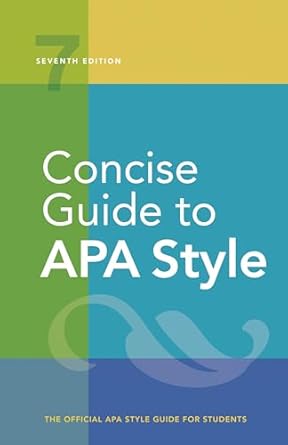
Concise Guide to APA Style: 7th Edition (OFFICIAL)
Page 225 Review
The Art of Quoting: A Deep Dive into Proper Citation Techniques
This excerpt delves into the intricacies of paraphrasing and quoting, providing crucial guidelines for academic writing.
Mastering these techniques ensures credibility and avoids plagiarism.
Let’s break down the key points:
Handling Material with Existing Quotation Marks
The text highlights a common challenge: quoting material that already contains quotation marks.
The guideline is clear: “When quoting material that already includes quotation marks for some other purpose (e.g., to enclose a phrase such as a coined expression or linguistic example; see Section 4.7), you may need to change double quotation marks to single or vice versa in your paper depending on the number of words you are quoting.”
This demonstrates the need for adaptability and careful consideration.
It emphasizes that the primary goal is clarity and avoiding confusion for the reader.
Short Quotations: The Single vs.
Double Quotation Mark Dilemma
For quotations under 40 words, a specific rule applies: “For quotations of fewer than 40 words, use single quotation marks within double quotation marks to set off material that was enclosed in double quotation marks in the original source.”
An example vividly illustrates this:
“Bliese et al. (2017) noted that ‘mobile devices enabled employees in many jobs to work ‘anywhere, anytime’ and stay electronically tethered to work outside formal working hours’ (p. 391).”
This correct example contrasts sharply with the incorrect one:
“Bliese et al. (2017) noted that “mobile devices enabled employees in many jobs to work “anywhere, anytime” and stay electronically tethered to work outside formal working hours” (p. 391).”
The difference might seem subtle, but the correct usage enhances readability and prevents misinterpretation.
Omitting Citations Within a Quotation: A Strategic Approach
The excerpt also addresses the issue of handling citations within the quoted material.
It uses an example related to sports participation and its impact on young women.
The original passage contains multiple citations:
“Sport participation has the potential to promote positive experiences for young women through the satisfaction of psychological needs (e.g., competence, relatedness, and autonomy), promotion of positive physiological adaptations to the cardiovascular system and musculoskeletal health, as well as the development of interpersonal and leadership skills (e.g., Bruner et al., 2017; Crocker, 2016; Eime et al., 2013; Forcier et al., 2006; Gunnell et al., 2014).”
When quoting Killham et al.’s summary of these studies, the citations are omitted:
“Sports can help young women have positive experiences ‘through the satisfaction of psychological needs (e.g., competence, relatedness, and autonomy), promotion of positive physiological adaptations to the cardiovascular system and musculoskeletal health, as well as the development of interpersonal and leadership skills’ (Killham et al., 2018, p. 297).”
The reasoning is provided:
“Note.
In the original passage, Killham et al. (2018) summarized the results of many studies and cited their sources at the end of the sentence.
To quote Killham et al.’s summary in your paper, cite Killham et al., and omit the citations at the end of the original sentence.
Interested readers can consult Killham et al. for further information.”
This demonstrates a strategic approach to quoting, prioritizing clarity and direct attribution while allowing interested readers to delve deeper into the original sources.
Conclusion
This excerpt provides valuable insights into the nuances of quoting and paraphrasing.
By adhering to these guidelines, writers can ensure accuracy, avoid plagiarism, and maintain the integrity of their work.
The examples provided are particularly helpful in illustrating the practical application of these rules, making them easier to understand and implement.
Buy full ebook for only $18: https://www.lulu.com/shop/american-psychological-association/concise-guide-to-apa-style-7th-edition-official/ebook/product-rmzpq54.html?page=1&pageSize=4
Quoting Citing Master The Art Of Academic Writing
Read more: Bias-Free Language: Race & Ethnicity Guide