
[toc]
citation styles guide mastering academic references
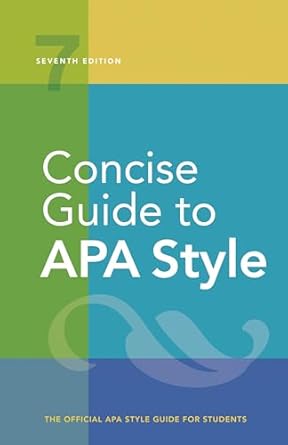
Concise Guide to APA Style: 7th Edition (OFFICIAL)
Page 276 Review
Analyzing Citation Styles in Academic Writing: A Deep Dive
This excerpt from an academic writing guide focuses on providing reference examples, specifically for citing various types of sources like interviews, journal articles, newspaper articles, blog posts, and online comments.
Understanding these citation styles is crucial for maintaining academic integrity and giving proper credit to the original authors.
Let’s break down some key examples:
Interviews and Journal Articles
The excerpt starts with examples of how to cite interviews and journal articles.
For instance, it provides the following example for an interview:
“Bustillos, M. (2013, March 19).
On video games and storytelling: An interview with Tom Bissell.
The New Yorker. https://www.newyorker.com/books/page-turner/on-video-games-and-storytelling-an-interview-with-tom-bissell”
This citation includes the author’s name (Bustillos, M.), the date of publication (2013, March 19), the title of the interview (“On video games and storytelling: An interview with Tom Bissell”), and the source (The New Yorker) along with the URL.
Similarly, for a journal article, it offers this example:
“Weir, K. (2017, January).
Forgiveness can improve mental and physical health.
Monitor on Psychology, 48(1), 30.”
Here, the citation includes the author’s name (Weir, K.), the date (2017, January), the title of the article (“Forgiveness can improve mental and physical health”), the journal name (Monitor on Psychology), the volume and issue number (48(1)), and the page number (30).
The excerpt also demonstrates how to use these citations in both parenthetical and narrative forms:
- Parenthetical citations: (Bergeson, 2019; Bustillos, 2013; Weir, 2017)
- Narrative citations: Bergeson (2019), Bustillos (2013), and Weir (2017)
Newspaper Articles
The excerpt further illustrates how to cite newspaper articles, differentiating between online and print versions.
Here are two examples:
“Guarino, B. (2017, December 4).
How will humanity react to alien life?
Psychologists have some predictions.
The Washington Post. https://www.washingtonpost.com/news/speaking-of-science/wp/2017/12/04/how-will-humanity-react-to-alien-life-psychologists-have-some-predictions”
and
“Hess, A. (2019, January 3).
Cats who take direction.
The New York Times, C1.”
The online article citation includes the URL, while the print version includes the section of the newspaper (C1).
The excerpt also provides examples of parenthetical and narrative citations for newspaper articles:
- Parenthetical citations: (Guarino, 2017; Hess, 2019)
- Narrative citations: Guarino (2017) and Hess (2019)
It notes that citing articles from online news websites follows a slightly different format compared to online newspapers.
Blog Posts and Online Comments
The guide also explains how to properly cite blog posts and comments on online articles.
For a blog post, it gives the following example:
“Klymkowsky, M. (2018, September 15).
Can we talk scientifically about free will?
Sci-Ed. https://blogs.plos.org/scied/2018/09/15/can-we-talk-scientifically-about-free-will/”
This citation includes the author’s name (Klymkowsky, M.), the date (2018, September 15), the title of the post (“Can we talk scientifically about free will?”), the blog name (Sci-Ed), and the URL.
The corresponding parenthetical and narrative citations are:
- Parenthetical citation: (Klymkowsky, 2018)
- Narrative citation: Klymkowsky (2018)
Finally, the excerpt provides an example of citing a comment on an online periodical article:
“KS in NJ. (2019, January 15).
From this article, it sounds like men are figuring something out that women have known forever. | know of many [Comment on the article “How workout buddies can help stave off loneliness”].
The Washington Post. https://wapo.st/2HDToGJ”
Here, the citation includes the commenter’s username (KS in NJ), the date (2019, January 15), the comment itself (a truncated version), and information about the article it’s commenting on, including the source (The Washington Post) and URL.
The parenthetical and narrative citations are:
- Parenthetical citation: (KS in NJ, 2019)
- Narrative citation: KS in NJ (2019)
The guide emphasizes the importance of crediting the person who left the comment using the format that appears with the comment (either a real name or a username).
Conclusion
This excerpt offers valuable guidance on citing a variety of sources commonly encountered in academic writing.
By providing clear examples and highlighting the nuances of parenthetical and narrative citations, it equips writers with the tools necessary to properly acknowledge sources and avoid plagiarism.
Mastering these citation techniques is essential for producing credible and ethical academic work.
Buy full ebook for only $18: https://www.lulu.com/shop/american-psychological-association/concise-guide-to-apa-style-7th-edition-official/ebook/product-rmzpq54.html?page=1&pageSize=4
Citation Styles Guide Mastering Academic References
Read more: Referencing Online Articles: A Clear Guide