
[toc]
writing style grammar review clarity precision
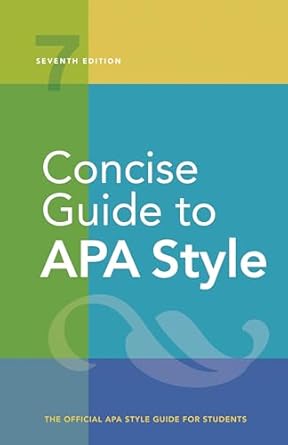
Concise Guide to APA Style: 7th Edition (OFFICIAL)
Page 64 Review
DOCTYPE html>
A Critical Review of Writing Style and Grammar: Clarity and Precision
This review delves into key principles of writing style and grammar, focusing on clarity, logical comparisons, anthropomorphism, and the importance of precise language in academic and professional writing.
The examined text emphasizes the need for unambiguous communication and avoiding common pitfalls that can obscure meaning.
Expertise and Terminology
The document rightly emphasizes the importance of demonstrating expertise and clarity. “Ensure that you are experts in your field, and define on first use any specialized terms that are key to your topic.” This is crucial for ensuring that the audience, regardless of their prior knowledge, can understand and engage with the material.
Defining key terms upfront eliminates ambiguity and sets a solid foundation for subsequent discussions.
Logical Comparisons: Avoiding Ambiguity
One of the most critical aspects of effective writing is making logical comparisons.
The text highlights how ambiguous comparisons can arise from omitted keywords or nonparallel structure. “Ensure that the comparisons you make are expressed clearly and logically.
Ambiguous or illogical comparisons result from the omission of key words or from nonparallel structure…” Consider the example:
“Twelve-year-olds were more likely to play with age peers than 6-year-olds.”
The review correctly points out the ambiguity in this sentence.
Does it mean 12-year-olds were more likely than 6-year-olds to play with age peers, or that 12-year-olds were more likely to play with age peers and less likely to play with 6-year-olds?
This kind of ambiguity can easily be avoided with careful attention to sentence structure.
The text further illustrates this point with another example: “The responses of transgender participants were more positive than cisgender participants.’” This is problematic because it’s unclear what is being compared.
Is it the responses of transgender participants compared to the responses of cisgender participants, or something else entirely?
The corrected version, “The responses of transgender participants were more positive than those of cisgender participants,” clarifies the comparison and eliminates the ambiguity.
Anthropomorphism: Maintaining Objectivity
Anthropomorphism, attributing human characteristics to animals or inanimate objects, is another area of concern. “Do not attribute human characteristics to animals or to inanimate sources—doing so is called anthropomorphism.” The provided examples effectively illustrate this point.
For example:
| Incorrect | Correct | Rationale |
|---|---|---|
| Rat couples (cage mates) were allowed to forage together. | Pairs of rats (cage mates) were allowed to forage together. | “Rat couples” implies a misleading parallel between human romantic couples and pairs of rats. |
| The theory concludes. | The theory addresses. | A theory might address, indicate, or present, but it is the researchers (not the theory itself) who conclude. |
Using “rat couples” implies a parallel with human romantic relationships, which is scientifically misleading.
Similarly, attributing the act of concluding to a theory is inaccurate; theories don’t conclude, researchers do.
This section provides very good and clear examples of anthropomorphism.
By avoiding anthropomorphism, writers maintain objectivity and accuracy in their descriptions and analyses.
Active Voice and Human Actors
The text also touches upon the use of active verbs with human actors, suggesting that it’s preferable to write “we extrapolated the rate of change” rather than “the study extrapolated the rate of change.” This reinforces the idea that research is an active process conducted by researchers, not a passive occurrence inherent in the study itself.
This principle promotes clarity and accountability in writing.
However, it also notes that many acceptable constructions in widespread use do not constitute anthropomorphism if they do not impede understanding or mislead readers.
Conclusion
Overall, the provided text offers valuable insights into writing style and grammar, particularly regarding clarity, logical comparisons, and avoiding anthropomorphism.
By adhering to these principles, writers can produce clear, concise, and accurate texts that effectively communicate their ideas and avoid misinterpretations.
The emphasis on precise language and thoughtful sentence structure is paramount for effective communication in any field.
Buy full ebook for only $18: https://www.lulu.com/shop/american-psychological-association/concise-guide-to-apa-style-7th-edition-official/ebook/product-rmzpq54.html?page=1&pageSize=4
Writing Style Grammar Review Clarity Precision
Read more: Reference List Guide: Alphabetization & Abbreviations